Blog

My First Steps Integrating OpenAI in Python Script using PyCharm


šŸš€ My First Steps Integrating OpenAI in Python Script with PyCharm

Learning how to integrate AI into Python has been an exciting journey for me. As a beginner, I wanted to start simple by connecting my Python environment in PyCharm to OpenAI’s API. Along the way, I learned a lot about how the setup actually works and what’s needed to make real API calls.

šŸ–„ļø Installing PyCharm

To start coding in Python, I first installed PyCharm, a popular IDE (Integrated Development Environment) made by JetBrains.

  1. Go to the official website: https://www.jetbrains.com/pycharm/download

  2. Choose the Community Edition (free) or Professional Edition (paid, with extra web tools).

  3. Download the installer for your operating system (Windows, macOS, or Linux).

  4. Run the installer and follow the setup wizard — it will guide you through installation and create a desktop shortcut.

  5. When you open PyCharm for the first time, it will prompt you to set up a Python interpreter — just select your existing Python installation or let PyCharm download one automatically.

Once PyCharm is installed, you’re ready to create a new Python project and start writing code!


āš™ļø Setting Up PyCharm for OpenAI

The first step was installing the OpenAI SDK inside PyCharm. I created a new project, then opened the terminal inside PyCharm — not the global Command Prompt or system terminal. It’s important to run commands within the project folder’s virtual environment, so the package installs only for that specific project. Inside the PyCharm terminal, I ran:

pip install openai

That installed the official OpenAI Python package, which lets you send prompts and get responses directly from your Python code. After the installation finished, I tested if it worked correctly by running the following simple command in the same PyCharm terminal:

python -m pip show openai
If the installation was successful, it displays information like the version number and install location. You can also verify it inside a Python file by writing:
import openai
print(openai.__version__)

If no errors appear, that means the OpenAI SDK is installed correctly and ready to use in your project.

I then created a simple Python file (test.py) and added:

from openai import OpenAI

client = OpenAI(api_key="your_api_key_here")

response = client.chat.completions.create(
    model="gpt-4o-mini",
    messages=[{"role": "user", "content": "Hello, AI!"}]
)

print(response.choices[0].message.content)

At this point, the code was ready, but it wouldn’t run yet without one important piece.


šŸ”‘ Getting My Secret API Key

To connect to OpenAI’s models, you need an API key, which acts as your personal access token.

I went to https://platform.openai.com/api-keys, clicked ā€œCreate new secret key,ā€ and copied it into my code. It’s important not to share this key publicly, since it’s tied to your account and billing.


šŸ’° Understanding Quotas and Credits

When I first ran the script, I got this error:

openai.RateLimitError: You exceeded your current quota...

At first, I thought something was wrong with my code but it turned out my API credits had expired. OpenAI gives limited free credits to new users, and once they’re used or expired, you need to add a payment method or buy credits to continue testing.

The good news is that even small amounts go a long way. A $5 credit can last weeks of practice if you use smaller models like gpt-4o-mini.

šŸ”’ Using a .env File to Protect Your API Key

A good security practice when working with APIs is to never store your secret key directly in your Python code. Instead, it’s safer to keep it in a .env file, which stores environment variables privately.

Inside your project folder, create a file named .env and add your key like this:

OPENAI_API_KEY=your_api_key_here

Then, install the python-dotenv package:

pip install python-dotenv

And load the key securely in your Python code:

from openai importOpenAI
from dotenv import load_dotenv
import os

load_dotenv()

# loads variablesfrom .env
client = OpenAI(api_key=os.getenv("OPENAI_API_KEY"))


This way, your key stays hidden from your main script and version control (like GitHub). It’s a small step that helps protect your account from unauthorized access and keeps your projects professional and secure.


🧠 What I Learned

Here are my key takeaways so far:

  • PyCharm makes it very easy to manage Python environments and packages.
  • Installing the OpenAI SDK is just one line of code with pip install openai.
  • You must generate and securely store your OpenAI API key to connect.
  • To run code successfully, you’ll need active credits or a valid billing setup.
  • Even with minimal credits, you can experiment with AI models affordably.
 

Mastering the Project Management Process for PMP

PMI, PMP, Project Management Process


Mastering the Project Management Process: Insights from PMBOK Guide and Rita’s Process Chart

Project management is a structured discipline that requires a clear understanding of processes to ensure project success. The PMBOK Guide and Rita Mulcahy’s Process Chart are two invaluable resources for PMP exam takers and project managers alike. This blog explores the five process groups defined by PMI and how Rita’s Process Chart complements them, offering practical insights for mastering project management.


The Five Process Groups in PMBOK Guide

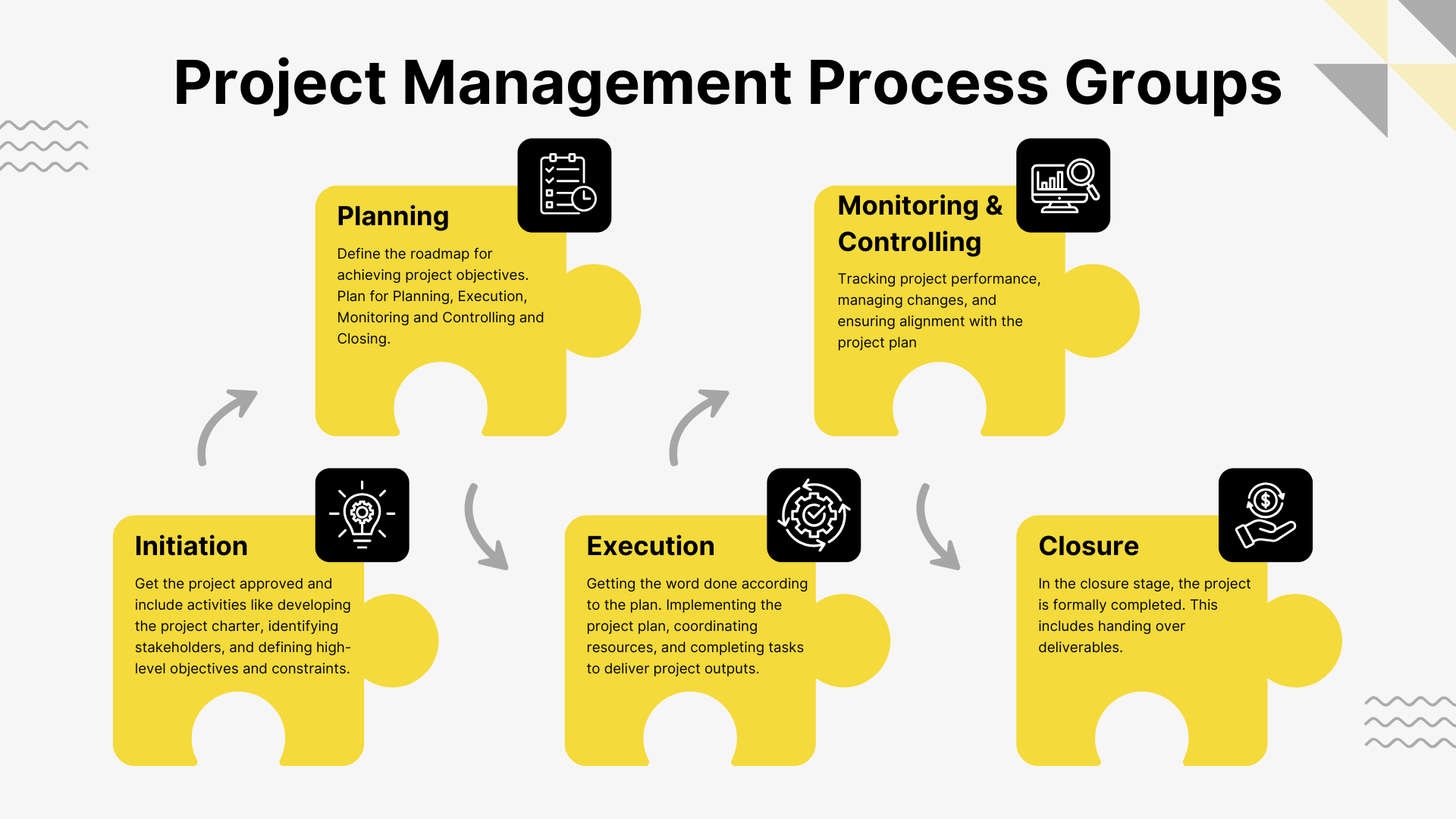
PMI’s PMBOK Guide outlines five essential process groups that form the backbone of project management:

  1. Initiating
    This phase involves formally authorizing the project and defining its objectives. Key activities include developing the project charter and identifying stakeholders. It sets the foundation for the project’s success.
  2. Planning
    The planning phase is where the roadmap for achieving project objectives is created. It includes developing the project management plan and subsidiary plans, such as scope, schedule, cost, and risk management plans. This phase ensures all aspects of the project are thoroughly planned.
  3. Executing
    Execution involves implementing the project plan, coordinating resources, and completing tasks to deliver project outputs. It is the phase where the majority of the project’s work is performed.
  4. Monitoring and Controlling
    This phase spans the entire project lifecycle, ensuring that performance aligns with the plan. It involves tracking progress, managing changes, and addressing risks to keep the project on track. If the project is far off the baselines as per the project plan, the project may trace back into Initiating phase.
  5. Closing
    The closing phase formalizes the completion of the project. Deliverables are handed over, contracts are finalized, and lessons learned are documented.

Rita’s Process Chart: A Practical Tool

Rita Mulcahy’s Process Chart is a visual representation that helps project managers understand the sequence and interrelation of activities within the process groups. You can access the process chart here – RPC-Process-Cats.pdf. It emphasizes the importance of knowing “where you are” in the project management process and provides clarity on the actions required at each stage.

Key Features of Rita’s Process Chart:

  • Structured Order in Planning: Rita’s chart highlights the logical sequence of planning activities, ensuring that each step builds on the previous one.
  • Integration Across Process Groups: It demonstrates how activities in one process group influence others, fostering a holistic approach to project management.
  • Focus on Outputs: The chart emphasizes the deliverables and outputs associated with each process group, helping project managers stay goal oriented.

While the PMBOK Guide provides a theoretical framework, Rita’s Process Chart offers a practical perspective. For example:

  • In the Planning phase, Rita’s chart outlines the order of activities, such as defining scope, creating the WBS, and developing the schedule, ensuring logical progression.
  • In the Monitoring and Controlling phase, the chart emphasizes continuous improvement and progressive elaboration, aligning with PMI’s focus on adaptability.

Together, these resources equip project managers with the tools and knowledge to navigate complex projects effectively.


Tips for PMP Exam Takers

  1. Understand the Process Groups: Memorize the five process groups and their key activities. Rita’s chart can help you visualize the flow of processes.
  2. Focus on Outputs: Pay attention to the deliverables associated with each process group, as exam questions often test your understanding of outputs.
  3. Leverage Rita’s Chart: Use the chart to understand the sequence of planning activities and how they relate to other process groups.

Be sure to check out the following posts if you are prepping for your exam:

  1. Project Management Framework – 5 Essential Concepts for PMP
  2. Master Key PM Framework Concepts for PMP Exam Success
  3. 10 Tips to Outsmart PMI’s PMP Exam Strategies

Project Life Cycle and Project Management Processes

PMP, PMI, Project management life cycle, Project management process


Project Life Cycle and Project Management Processes

For those preparing for the PMP exam, understanding the nuances of the Project Life Cycle and Project Management Processes outlined in the PMBOK Guide is essential. This blog will demystify these concepts, provide examples from IT projects, and offer tips for tackling related exam questions.


Types of Project Life Cycles

In project management, the life cycle defines the approach used to execute projects. The PMBOK Guide identifies four primary types:

  1. Predictive Life Cycle
    Often referred to as “waterfall,” this approach is linear and sequential. All requirements are defined upfront, and the project progresses through predefined stages: initiation, planning, execution, monitoring, and closing.

    • Example: Constructing a residential building. The requirements—such as number of floors, layout design, and structural specifications—are determined in advance. Each phase, from foundation work to interior finishing, follows a structured plan without significant changes.
  2. Adaptive Life Cycle
    Also known as “agile,” this approach embraces flexibility and iterative progress. Deliverables are completed in increments, allowing for adaptation based on stakeholder feedback.

    • Example: Building a mobile banking app where features like user authentication and money transfer are developed in sprints. Iterative testing and adjustments ensure the app evolves to meet user needs dynamically.
  3. Iterative Life Cycle
    This approach combines elements of predictive and adaptive life cycles. Iterative cycles are repeated to refine deliverables before finalization.

    • Example: Designing a website for an e-commerce business, where the design evolves over multiple iterations until stakeholder satisfaction is achieved.
  4. Hybrid Life Cycle
    Hybrid blends predictive and adaptive approaches, tailoring the process to project needs.

    • Example: Launching an IT product with a predictive approach for hardware development and an adaptive approach for software updates.

The Five Process Groups in Project Management

The PMBOK Guide outlines five process groups integral to project management. These groups relate directly to the phases of the project life cycle:

  1. Initiating
    This process involves defining the project, securing stakeholder buy-in, and formally authorizing the project. In the life cycle, it corresponds to the initial phase, where objectives and scope are defined.
  2. Planning
    The planning process determines the course of action for the project. It includes identifying tasks, resources, timelines, risks, and communication strategies. This phase aligns with defining how the life cycle will unfold.
  3. Executing
    Here, the project’s plan is put into action. Tasks are completed, resources are allocated, and deliverables are produced. This process aligns with the execution phase of the life cycle.
  4. Monitoring and Controlling
    Monitoring progress ensures the project stays on track with its objectives, while controlling involves managing changes. These processes span the entirety of the life cycle, ensuring alignment with the plan.
  5. Closing
    This final process group formalizes the completion of the project. Deliverables are handed over, contracts are finalized, and lessons learned are documented. It aligns with the closing phase of the life cycle.

Tips for PMP Exam Takers

Here are some actionable tips for PMP candidates when tackling questions on these topics:

  1. Understand the Frameworks
    Be crystal clear on the distinctions between predictive, adaptive, iterative, and hybrid life cycles. PMP questions may challenge your ability to match scenarios with the appropriate life cycle type.
  2. Know the Process Groups
    Memorize the five process groups and their relationship to the life cycle. Exam questions often test your understanding of which process occurs during each life cycle phase.
  3. Practice IT Project Examples
    Familiarize yourself with real-world examples—like those described here—so you can confidently navigate application-based questions.

By mastering the concepts of the Project Life Cycle and Project Management Processes, you’ll be well-equipped to tackle this topic on the PMP exam. Remember, practice and application are your best allies. If you are in the process of preparing for your exams, some of the posts below may be a useful skim through:

  1. Project Management Framework – 5 Essential Concepts for PMP
  2. Master Key PM Framework Concepts for PMP Exam Success
  3. 10 Tips to Outsmart PMI’s PMP Exam Strategies

Some simple questions to revise and remember these concepts of Project Life Cycle and Project Management Processes for PMP exam:

1. Which project life cycle is best suited for a situation where the requirements are well understood and unlikely to change?

  1. Adaptive
  2. Predictive
  3. Iterative
  4. Hybrid

2. In the initiating process group, which document is typically created to formally authorize the project?

  1. Project Management Plan
  2. Business Case
  3. Project Charter
  4. Stakeholder Register

3. Which life cycle involves producing deliverables incrementally while allowing feedback to influence future iterations?

  1. Predictive
  2. Adaptive
  3. Iterative
  4. Hybrid

4. What is the primary goal of the monitoring and controlling process group?

  1. Initiating a new phase
  2. Tracking project performance and managing changes
  3. Executing project activities
  4. Documenting lessons learned

5. In a predictive life cycle, which phase typically involves the most detailed planning?

  1. Executing
  2. Initiating
  3. Monitoring and Controlling
  4. Planning

6. In which type of project life cycle are the deliverables typically completed in “sprints” or short cycles?

  1. Predictive
  2. Iterative
  3. Adaptive
  4. Hybrid

7. During which process group are lessons learned typically documented?

  1. Initiating
  2. Monitoring and Controlling
  3. Closing
  4. Planning

8. Which of the following is NOT a characteristic of an adaptive life cycle?

  1. Flexibility in scope and requirements
  2. Sequential planning of all project phases upfront
  3. Regular stakeholder feedback
  4. Incremental delivery of value

9. What is the main difference between predictive and iterative life cycles?

  1. Predictive uses sprints, while iterative follows strict requirements.
  2. Predictive is linear and sequential, while iterative involves refinement in cycles.
  3. Iterative defines scope upfront, while predictive allows scope adjustments.
  4. Iterative focuses on hardware development, while predictive focuses on software.

10. Which key output is commonly associated with the closing process group?

  1. Stakeholder Register
  2. Project Charter
  3. Deliverable Acceptance Document
  4. Risk Register

11. In the hybrid life cycle, which component typically follows the adaptive approach?

  1. Final deliverables
  2. Stakeholder engagement strategy
  3. Software development process
  4. Construction process

12. Which document helps to identify individuals or groups who are affected by or can influence the project’s outcome?

  1. Risk Management Plan
  2. Stakeholder Register
  3. Issue Log
  4. Quality Management Plan

13. Which of the following describes the iterative approach to project life cycles?

  1. It delivers the entire project at once, with no adjustments.
  2. It adapts the scope and priorities after stakeholder input during each cycle.
  3. It blends adaptive and predictive methodologies for flexibility.
  4. It delivers refined outputs in repeated cycles until completion.

14. Which process group involves the most resource allocation and task execution?

  1. Planning
  2. Executing
  3. Closing
  4. Monitoring and Controlling

15. What is the purpose of the business case in the initiating phase?

  1. To assign resources to the project team
  2. To justify the investment in the project
  3. To track project progress
  4. To record lessons learned

Here are the correct answers to the set of questions


1. B. Predictive
2. C. Project Charter
3. C. Iterative
4. B. Tracking project performance and managing changes
5. D. Planning
6. C. Adaptive
7. C. Closing
8. B. Sequential planning of all project phases upfront
9. B. Predictive is linear and sequential, while iterative involves refinement in cycles.
10. C. Deliverable Acceptance Document
11. C. Software development process
12. B. Stakeholder Register
13. D. It delivers refined outputs in repeated cycles until completion.
14. B. Executing
15. B. To justify the investment in the project


Project Management Framework – 5 Essential Concepts for PMP

PMP, PMI, PMP exam, Project Management, Framework


5 Key Concepts in the Project Management Framework for PMP

Understanding the fundamental concepts in PMI’s Project Management Framework is vital for anyone aiming to pass the PMP exam or excel in their project management career. Let’s dive into five key concepts—constraints, stakeholder management, organizational structure, enterprise environmental factors, and organizational process assets—along with examples related to IT projects and tips for PMP exam preparation.


1. Project Constraints

Project constraints are the limitations within which a project must be executed. PMI highlights six common constraints: scope, time, cost, quality, resources, and risk. These constraints are interdependent; changes in one often affect the others.

Example: In a software development project, the client requests additional features (scope change). To accommodate this, the project manager needs to extend the timeline (time constraint) and allocate extra developers (resource constraint), leading to increased costs (cost constraint).

Tip: Memorize the “triple constraint” (scope, time, cost) and how it expands into the six-constraint model.


2. Stakeholder Management

Stakeholder management involves identifying, analyzing, and engaging individuals or groups who are impacted by or can influence the project. Effective stakeholder management ensures that their needs and expectations are aligned with project goals.

Example: In a cloud migration project, stakeholders may include IT teams, end-users, and executive sponsors. While IT teams focus on technical feasibility, end-users may prioritize ease of use, and sponsors will want cost-effective implementation. Balancing these expectations is critical for success.

Tip: Treat stakeholders like assistant team – keep them informed, elicit their feedback and drive to satisfy their needs/expectation


3. Organizational Structure

Organizational structure defines how authority, roles, and responsibilities are distributed within a company. PMI recognizes three types of structures: functional, projectized, and matrix (weak, balanced, and strong).

Example: In a functional structure, a database upgrade project may rely on IT and finance departments coordinating separately. In a projectized structure, a dedicated project team handles everything. In a matrix structure, both departmental heads and project managers share authority over resources.

Tips: 

  • Practice identifying organizational structures based on question scenarios in practice tests.
  • Understand the pros and cons of each structure, especially for resource allocation and authority distribution.

4. Enterprise Environmental Factors (EEFs)

EEFs include the external and internal conditions that influence a project’s success. These may include market conditions, organizational culture, available resources, regulations, or technology infrastructure.

Example: An IT company implementing a new cybersecurity tool must comply with government regulations (external EEF) and work within the constraints of its IT infrastructure (internal EEF).

Tips:

  • Think of it as company culture and existing system that comes with project and not in control of project team.
  • Remember that EEFs are typically uncontrollable and must be accounted for in planning.

5. Organizational Process Assets 

Organizational Process Assets are the internal assets of an organization that influence project management. These include processes, templates, policies, historical data, and lessons learned from past projects.

Example: For a mobile app development project, the project team might use a standard risk management plan template from the company’s repository. They may also review lessons learned from a previous app project to avoid past mistakes.

Tips:

  • Differentiate between OPAs and EEFs—OPAs are controllable, whereas EEFs are not.
  • Think of existing processes, procedures and historical information that provide direction and guidance in project.


Please check out some of the posts below that might give you some quick insights for your exam:

  1. The Project Manager Defined: PMI’s Perspective
  2. Master Key PM Framework Concepts for PMP Exam Success
  3. 10 Tips to Outsmart PMI’s PMP Exam Strategies


Master Key PM Framework Concepts for PMP Exam Success


PMP, MP Exam, PMI, Project Management Framework

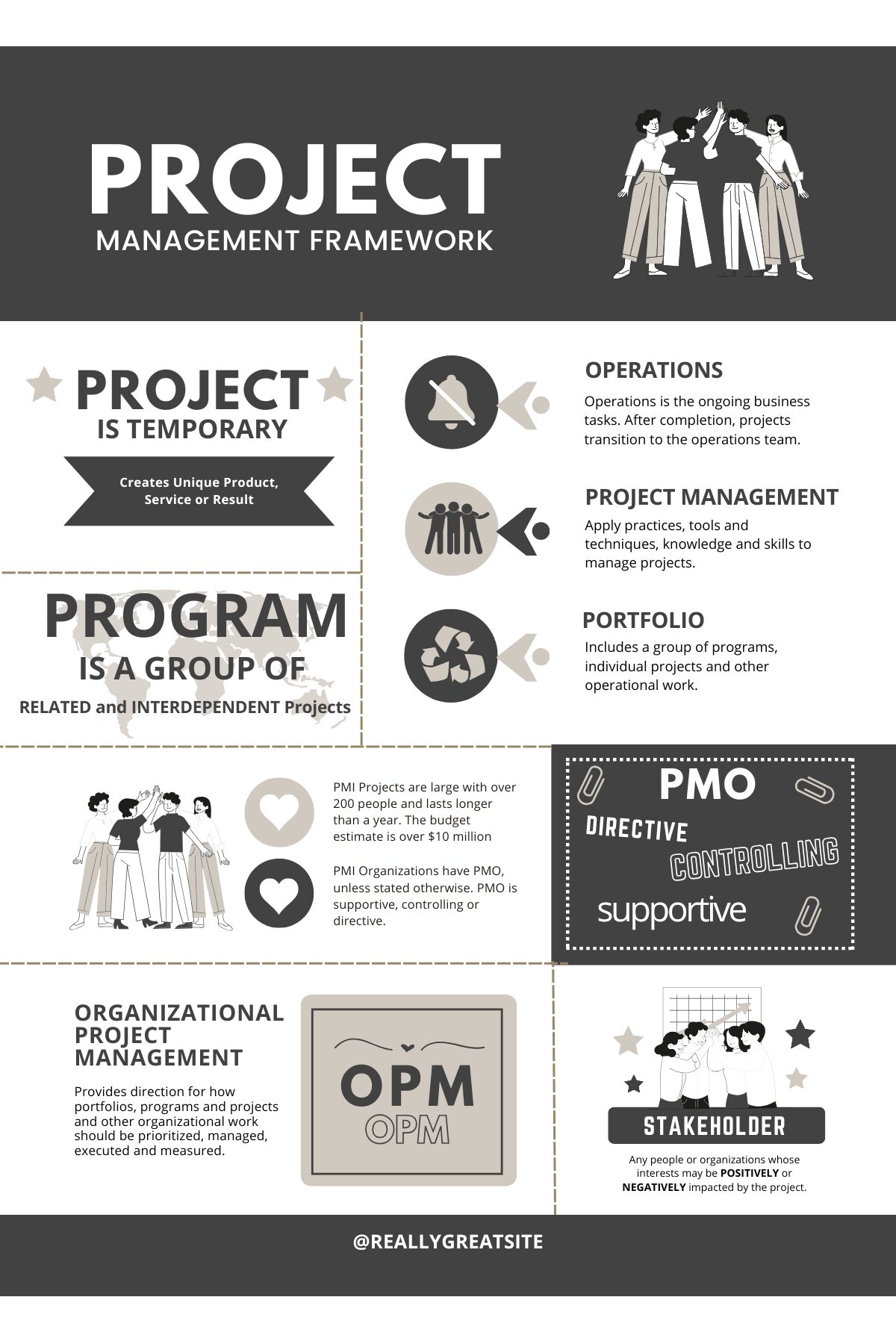
Understanding PMI’s Project Management Framework is essential for PMP exam preparation. This framework lays the foundation for project management principles, emphasizing key terms and their interconnections. In this post, we’ll break down critical concepts like project, program, portfolio, operations, PMO, OPM, and stakeholder engagement to help you confidently tackle the PMP exam.


Key Concepts in Project Management Framework


1. What is a Project?

A project is defined by PMI as a temporary endeavor with a clear beginning and end, undertaken to create a unique product, service, or result. Projects are the vehicle for implementing change and driving innovation, with constraints like scope, time, and cost.

Example: Developing a mobile app or constructing a building.


2. What is a Program?

A program is a collection of related projects managed in a coordinated way to gain benefits that wouldn’t be achieved if handled individually. Programs align projects with broader organizational strategies, focusing on synergy and efficiency.

Example: A company launching multiple technology upgrades across departments as part of a digital transformation initiative.


3. What is a Portfolio?

A portfolio encompasses projects, programs, and operations managed collectively to achieve strategic objectives. Portfolio management ensures proper allocation of resources, prioritization of initiatives, and alignment with organizational goals.

Example: A financial institution managing a portfolio that includes projects for mobile banking, cybersecurity, and regulatory compliance.


4. What is Operations?

Operations refer to the ongoing, repetitive activities that sustain an organization’s core business functions. Unlike projects, operations are not temporary and do not create unique deliverables.

Example: Running a manufacturing plant or maintaining IT services.


5. What is a PMO (Project Management Office)?

A PMO is a centralized entity within an organization tasked with establishing and maintaining project management standards. It provides support, governance, and guidance to ensure consistency across projects and programs.

Types of PMO:

  1. Supportive PMO: Offers tools, training, and templates without imposing strict controls.
  2. Controlling PMO: Enforces compliance with project management practices.
  3. Directive PMO: Directly manages projects and assigns project managers.

PMOs are critical in bridging organizational strategies with project execution, ensuring streamlined processes and effective delivery.


6. What is OPM (Organizational Project Management)?

OPM is PMI’s framework for aligning projects, programs, and portfolios with organizational strategy. It integrates project management practices into decision-making and governance, driving strategic benefits and optimizing performance.

Key Elements of OPM:

  • Ensures that projects contribute to organizational goals.
  • Enhances governance and resource utilization.
  • Enables better decision-making across all levels of project execution.

Stakeholder Engagement in Project Management

Stakeholders are individuals, groups, or organizations affected by the project or who can influence its success. PMI emphasizes the importance of engaging stakeholders effectively to ensure alignment and avoid conflicts.

Key Stakeholder Engagement Activities:

  1. Stakeholder Identification: Identify who has an interest or influence on the project.
  2. Analysis: Assess stakeholder expectations, interests, and impact on the project.
  3. Engagement Planning: Strategize how to involve stakeholders in key decisions and updates.
  4. Active Communication: Maintain transparent, regular updates to build trust and manage expectations.

Strong stakeholder engagement enhances collaboration and increases the likelihood of project success by aligning stakeholder needs with project goals.


The PMI Project Management Framework is rich with interconnected concepts that form the backbone of effective project management. Understanding terms like portfolio, PMO, OPM, and stakeholder engagement will not only prepare you for the PMP exam but also equip you with the tools to succeed as a project management professional.

By mastering these principles and their applications, you’ll confidently navigate scenario-based questions and establish yourself as a strategic and capable project manager.


Some additional posts that might give you some key information before your exam:

  1. Master Key PM Framework Concepts for PMP Exam Success
  2. The Project Manager Defined: PMI’s Perspective
  3. 10 Tips to Outsmart PMI’s PMP Exam Strategies

The Project Manager Defined: PMI’s Perspective

PMP, PMI, Project Management, PMP Exam,

Understanding PMI’s Vision of the Project Manager: A Guide for PMP Exam Takers

If you’re preparing for your PMP exam, it’s essential to understand PMI’s (Project Management Institute) view of a project manager. PMI doesn’t just define project management as a profession—it elevates it to a high level where PMPs (Project Management Professionals) are empowered with tools, authority, and processes to drive projects toward success. This blog helps in defining Project Manager from PMI Perspective insights to help PMP exam takers embody that vision for exam success.


PMI’s Project Manager: The High-Level Vision

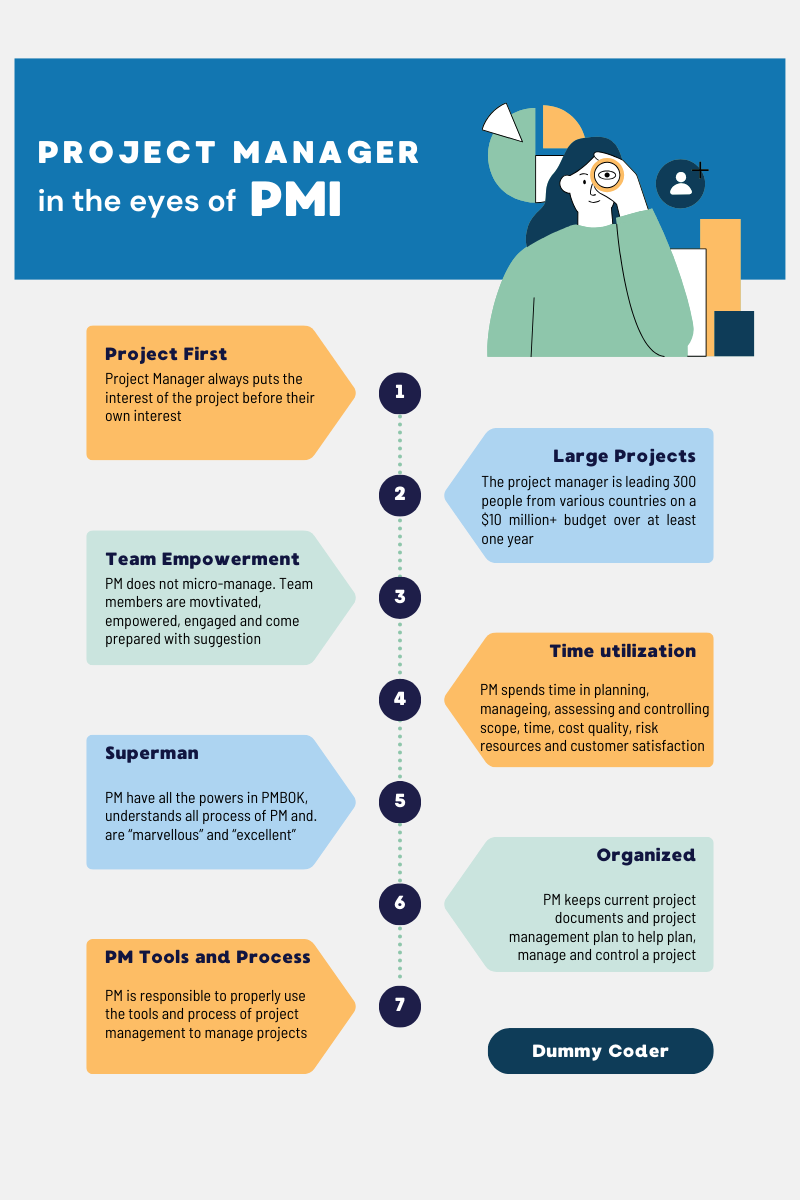
In PMI’s framework, the project manager is the ultimate driver of project success. The project manager keeps the project as the highest priority at all times, ensuring that decisions, resources, and efforts are aligned with project objectives. PMI positions project managers not as micromanagers but as strategic leaders who guide teams, manage stakeholders, and oversee the entire project lifecycle with precision.

PMI emphasizes that project managers:

  • Have authority and responsibility: The PMBOKĀ® Guide defines the project manager as the person with the most power within the project environment, entrusted with the responsibility to make key decisions.
  • Leverage tools and processes: PMI equips project managers with a comprehensive toolkit of processes and techniques that span Initiating, Planning, Executing, Monitoring & Controlling, and Closing phases.
  • Think strategically: A PMI project manager focuses on the big picture, integrating business goals with project outcomes rather than diving into granular details.

Key Traits of PMI’s Project Manager

To embody PMI’s ideal project manager, you need to develop certain traits and behaviors, which are heavily emphasized in the PMP exam:

  1. Project-Centric Mindset: PMI insists that the project manager prioritizes the project above all else. Decisions should revolve around project success, even when navigating conflicts or compromises.
  2. Leader, Not Micromanager: PMI’s project manager leads by inspiring and motivating teams, rather than overseeing every small task. Trust and delegation are critical to effective leadership.
  3. Proactive Problem-Solver: Anticipating risks and addressing challenges head-on are key skills for keeping projects on track.
  4. Master of PMI Tools: PMI expects project managers to utilize the tools, templates, and methodologies outlined in the PMBOKĀ® Guide to optimize processes and decision-making.
  5. Ethical and Professional: Integrity is paramount; PMI demands that project managers uphold high ethical standards and treat stakeholders and teams with professionalism.

Tips for PMP Exam Takers: Thinking Like a PMI Project Manager

To excel in the PMP exam, you need to approach scenarios with PMI’s high-level vision in mind. Here are some key strategies:

  1. Adopt a Project-First Mentality: Ensure every decision and action benefits the project’s objectives and avoid being drawn into unrelated issues.
  2. Think Big Picture: Avoid micromanaging in situational questions and focus on strategic outcomes.
  3. Leverage PMBOKĀ® Tools: Reference PMI’s tools and processes in your answers, showing how they help achieve success.
  4. Prove Leadership Skills: Show how you can lead teams, resolve conflicts, and inspire collaboration.
  5. Stay Ethical: Always choose the option that reflects PMI’s emphasis on integrity and professionalism.

PMI sets the bar high for project managers, positioning them as empowered leaders equipped with the tools and authority to drive project success. As a PMP exam taker, understanding PMI’s vision will help you navigate the exam with confidence and align your mindset with PMI’s expectations. Think like a project-focused leader who uses every tool and process available, prioritizes ethical decision-making, and inspires teams to achieve project excellence.

This isn’t just preparation for an exam—it’s preparation for a career that exemplifies PMI’s ideals. Step into the role of the project manager PMI envisions, and you’ll not only pass the PMP exam but also elevate your professional potential to new heights.


Here are some questions to revise the concept before you leave:


1. According to PMI, what is the project manager’s primary responsibility?

  1. Focusing on business-as-usual operations
  2. Ensuring that all project resources are solely focused on organizational goals
  3. Keeping the project as the highest priority and aligning resources with project objectives
  4. Delegating every aspect of project execution to team members

2. How does PMI describe the project manager in the PMBOKĀ® Guide?

  1. As an administrator responsible for reports and documentation
  2. As the person with the most authority and decision-making responsibility within the project environment
  3. As a facilitator of team discussions
  4. As a neutral party between stakeholders

3. What is one key trait PMI emphasizes for project managers?

  1. A micromanagement style to ensure every task is completed on time
  2. Authority without responsibility
  3. A project-centric mindset that prioritizes project success above all else
  4. A focus solely on technical aspects of the project

4. Why is it essential for project managers to avoid micromanaging, according to PMI?

  1. It increases the complexity of managing resources
  2. It allows stakeholders to assume leadership
  3. It fosters trust and inspires team members while enabling strategic leadership
  4. It reduces documentation requirements for the project

5. What does PMI mean by “thinking strategically” as a project manager?

  1. Focusing on technical deliverables rather than organizational goals
  2. Aligning business goals with project outcomes and focusing on the big picture
  3. Constantly revising scope based on team feedback
  4. Setting daily tasks for team members

6. What is PMI’s perspective on risk management?

  1. Risks should be addressed only when they are realized
  2. Risks should be anticipated and addressed proactively to keep the project on track
  3. Risks are solely the responsibility of stakeholders to resolve
  4. Risk management is not emphasized in PMI’s framework

7. In PMI’s framework, which of the following is the best example of utilizing PMBOKĀ® tools?

  1. Following informal communication styles to resolve issues
  2. Using standard methodologies and processes across all phases of the project life cycle
  3. Delegating all documentation responsibilities to stakeholders
  4. Avoiding regular status updates

8. A project manager who exemplifies PMI’s ideal is MOST likely to:

  1. Avoid using ethical considerations in decision-making
  2. Focus exclusively on short-term deliverables
  3. Motivate the team and resolve conflicts while maintaining professionalism
  4. Keep themselves distant from the team

9. Which of the following is a key aspect of PMI’s view of project success?

  1. Delivering the project regardless of stakeholder satisfaction
  2. Ensuring that all conflicts are resolved by the sponsor
  3. Aligning decisions, resources, and efforts with project objectives
  4. Delegating all authority to functional managers

10. What should a project manager focus on when resolving conflicts, according to PMI?

  1. Avoiding decision-making to maintain neutrality
  2. Aligning conflict resolution efforts with project success and objectives
  3. Escalating all issues to the project sponsor
  4. Allowing team members to resolve conflicts independently

11. In PMI’s framework, which leadership style is preferred?

  1. Directive and controlling
  2. Inspirational and motivational
  3. Neutral and passive
  4. Reactive and detached

12. What is a defining characteristic of PMI’s project manager with respect to tools and methodologies?

  1. They avoid formal project tools to maintain agility
  2. They rely solely on past experiences rather than structured frameworks
  3. They leverage PMBOKĀ® Guide tools and methodologies for effective decision-making
  4. They allow team members to design their own methods for project execution

13. Why is ethical behavior critical for a project manager, according to PMI?

  1. It ensures legal compliance and avoids contractual issues
  2. It builds trust and ensures professionalism in managing teams and stakeholders
  3. It avoids conflicts during the project closing phase
  4. It is solely required for obtaining the PMP certification

14. When analyzing a project scenario on the PMP exam, what mindset should the project manager adopt?

  1. A focus on short-term team dynamics
  2. A project-first mentality prioritizing objectives above all else
  3. A passive approach to maintain neutrality
  4. A reliance on ad-hoc solutions rather than processes

15. Which of the following tips is NOT aligned with PMI’s vision for the project manager during the PMP exam?

  1. Thinking big picture and avoiding micromanagement
  2. Resolving conflicts without considering project objectives
  3. Leveraging PMBOKĀ® tools for optimizing processes
  4. Prioritizing ethical decision-making

Answers:

1. C. Keeping the project as the highest priority and aligning resources with project objectives
2. B. As the person with the most authority and decision-making responsibility within the project environment
3. C. A project-centric mindset that prioritizes project success above all else
4. C. It fosters trust and inspires team members while enabling strategic leadership
5. B. Aligning business goals with project outcomes and focusing on the big picture
6. B. Risks should be anticipated and addressed proactively to keep the project on track
7. B. Using standard methodologies and processes across all phases of the project life cycle
8. C. Motivate the team and resolve conflicts while maintaining professionalism
9. C. Aligning decisions, resources, and efforts with project objectives
10. B. Aligning conflict resolution efforts with project success and objectives
11. B. Inspirational and motivational
12. C. They leverage PMBOKĀ® Guide tools and methodologies for effective decision-making
13. B. It builds trust and ensures professionalism in managing teams and stakeholders
14. B. A project-first mentality prioritizing objectives above all else
15. B. Resolving conflicts without considering project objectives


Let me know if you’d like further clarification on any of the questions or answers!

10 Tips to Outsmart PMI’s PMP Exam Strategies


PMP, PMI

10 Tips to Outsmart PMI’s Exam Strategies


The Project Management Professional (PMP) exam is a challenging milestone for project managers worldwide, not just for its breadth but also for the unique twists PMI (Project Management Institute) incorporates into the test. Being prepared goes beyond just memorizing the PMBOK Guide; you need a strategic approach to tackle the subtle traps and techniques PMI uses. Here’s how you can gain an edge:

1. Understand PMI’s Question Structure

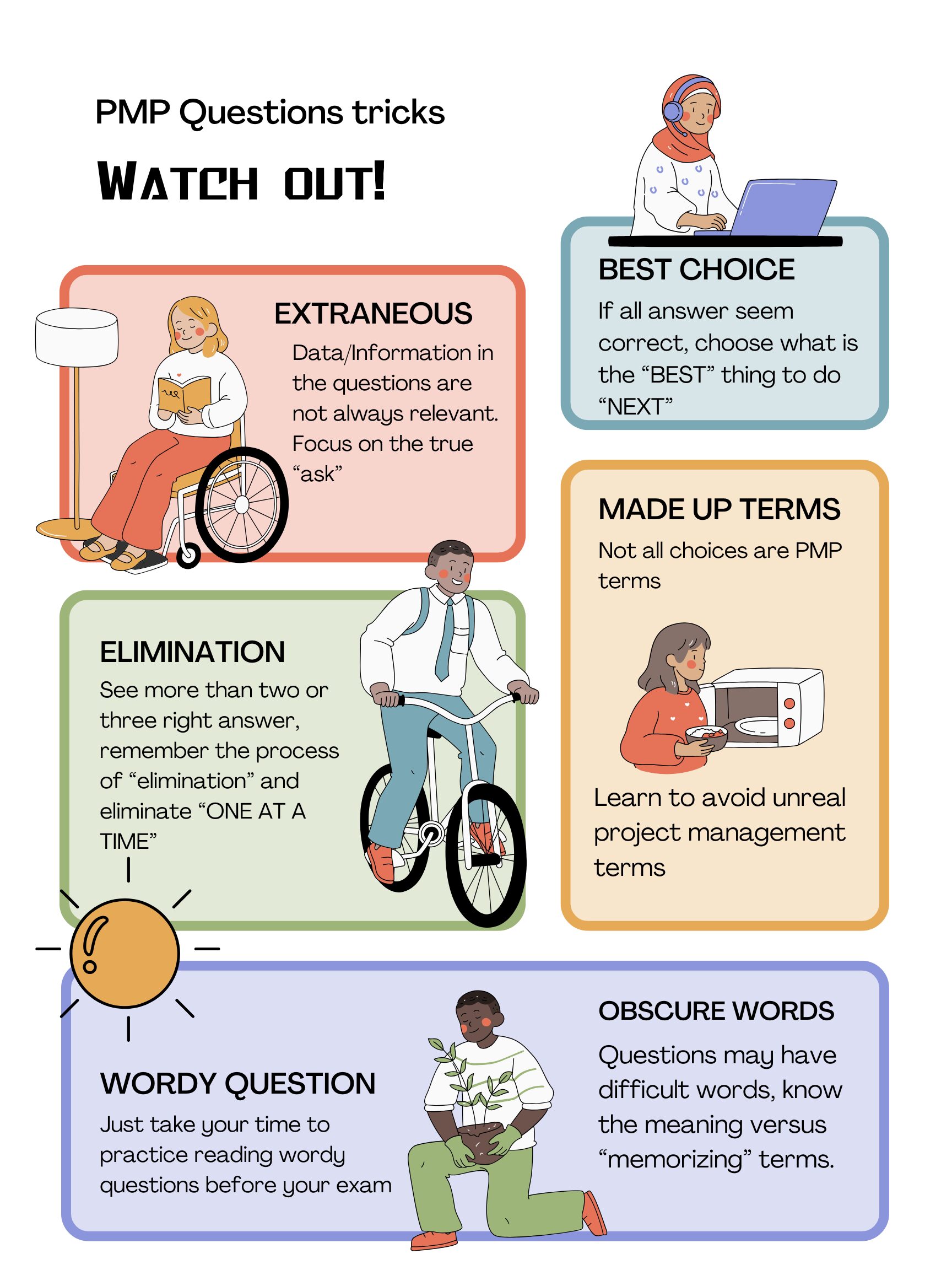
PMI often uses situational questions to test not just knowledge, but real-world application. These questions typically describe a project scenario and ask what you would do next. PMI expects answers aligned with best practices in the PMBOK Guide, not necessarily what you might do in your day-to-day projects. Always think like PMI while answering.

Pro Tip: Look for keywords like “next,” “best,” or “most appropriate,” as they guide you to the essence of the question.


2. Know the Stakeholder-Centric Focus

PMI places significant emphasis on stakeholder management, as a project’s success is often tied to stakeholder satisfaction. When in doubt during the exam, prioritize solutions that reflect good communication, empathy, and stakeholder engagement.

Pro Tip: If you’re unsure between two answers, choose the one that focuses more on involving or satisfying stakeholders.


3. Beware of Distractors

PMI includes distractors—answers that seem correct but aren’t the best according to the standards. These options often rely on common misconceptions or project-specific thinking rather than PMI practices. Carefully read the question and evaluate each option against PMI’s perspective.

Pro Tip: Eliminate obviously incorrect choices first, then focus on picking the best answer among the remaining ones.


4. Memorize Key Formulas and Concepts

While the new PMP exam is less formula-focused, you’ll still encounter quantitative questions, particularly in areas like Earned Value Management (EVM). Knowing formulas like SPI, CPI, and critical path calculations is essential.

Pro Tip: Practice solving numerical questions under time constraints. Use flashcards to memorize formulas and understand their application in context.


5. Practice Time Management

The exam contains 180 questions to be completed in 230 minutes. PMI uses a mix of multiple-choice, hotspot, and drag-and-drop questions. Without effective time management, you risk rushing the last set of questions.

Pro Tip: Allocate no more than 75 minutes for each set of 60 questions, leaving enough time to review flagged items. Practicing mock exams with timed conditions is critical.


6. Master Agile and Hybrid Methodologies

A significant portion of the PMP exam now covers Agile and hybrid project management approaches. Be familiar with the Agile Manifesto, key ceremonies, and roles like Scrum Master and Product Owner. PMI values the ability to blend Agile principles into traditional project management when needed.

Pro Tip: Focus on understanding when and why to apply Agile or hybrid approaches rather than just memorizing frameworks.


7. Use the Process of Elimination

For tricky questions, the process of elimination is your best friend. Even if you’re unsure, eliminating one or two answers increases your odds of guessing correctly.

Pro Tip: PMI rarely endorses punitive approaches like firing a team member or skipping stakeholder communication—so you can often rule out answers suggesting those actions.


8. Take Advantage of Breaks

The exam allows two 10-minute breaks, which can be a game-changer. Use these breaks to reset, refocus, and manage stress. Staying calm and collected is key to maintaining performance throughout the exam.

Pro Tip: Use your breaks to hydrate, stretch, and clear your mind. Don’t overanalyze questions during this time.


9. Simulate the Exam Environment

Practicing mock exams in a simulated environment helps build your stamina and familiarize you with the test format. Ensure your mock exams reflect the same blend of situational, Agile, and traditional PM questions you’ll encounter.

Pro Tip: Use reputable sources like PMI’s practice exams or those from trusted providers aligned with the PMP Exam Content Outline (ECO).


10. Always Choose the Proactive Approach

PMI values proactive project management over reactive solutions. Answers that reflect planning, stakeholder engagement, and prevention of issues are usually favored over those addressing problems after they occur.

Pro Tip: If two answers seem plausible, pick the one that focuses on anticipating and mitigating risks over fixing problems retrospectively.


Preparing for the PMP exam involves more than just studying; it requires understanding PMI’s unique perspective and exam strategies. By applying these tips and tricks, you’ll be better equipped to navigate PMI’s challenges and succeed on exam day. Remember, practice and a calm mindset are your best allies. Good luck!


If you are prepping for your PMP exam, don’t forget to take a quick look at the following posts as well:

Master Key PM Framework Concepts for PMP Exam Success

The Project Manager Defined: PMI’s Perspective

Unlock the Potential of ChatGPT: 20 Creative and Practical Uses


chatgpt-uses


Creative and Practical Ways to Unlock ChatGPT’s Potential


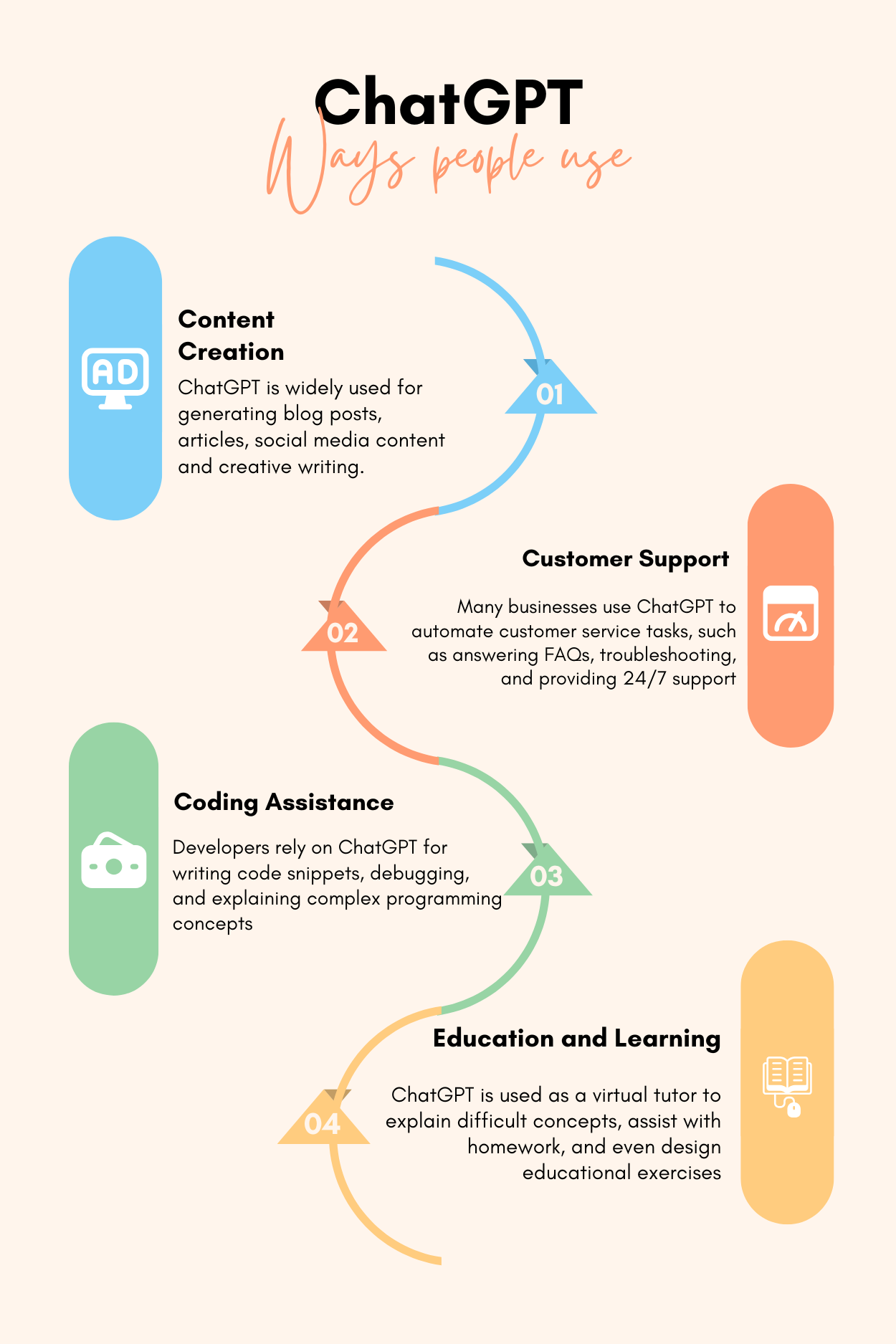
ChatGPT’s advanced natural language processing capabilities offer endless possibilities. Whether you’re looking to spark creativity, enhance productivity, or explore new ideas, this tool is versatile and powerful. Here are 20 creative and practical ways to Unlock ChatGPT’s Potential

content-creation

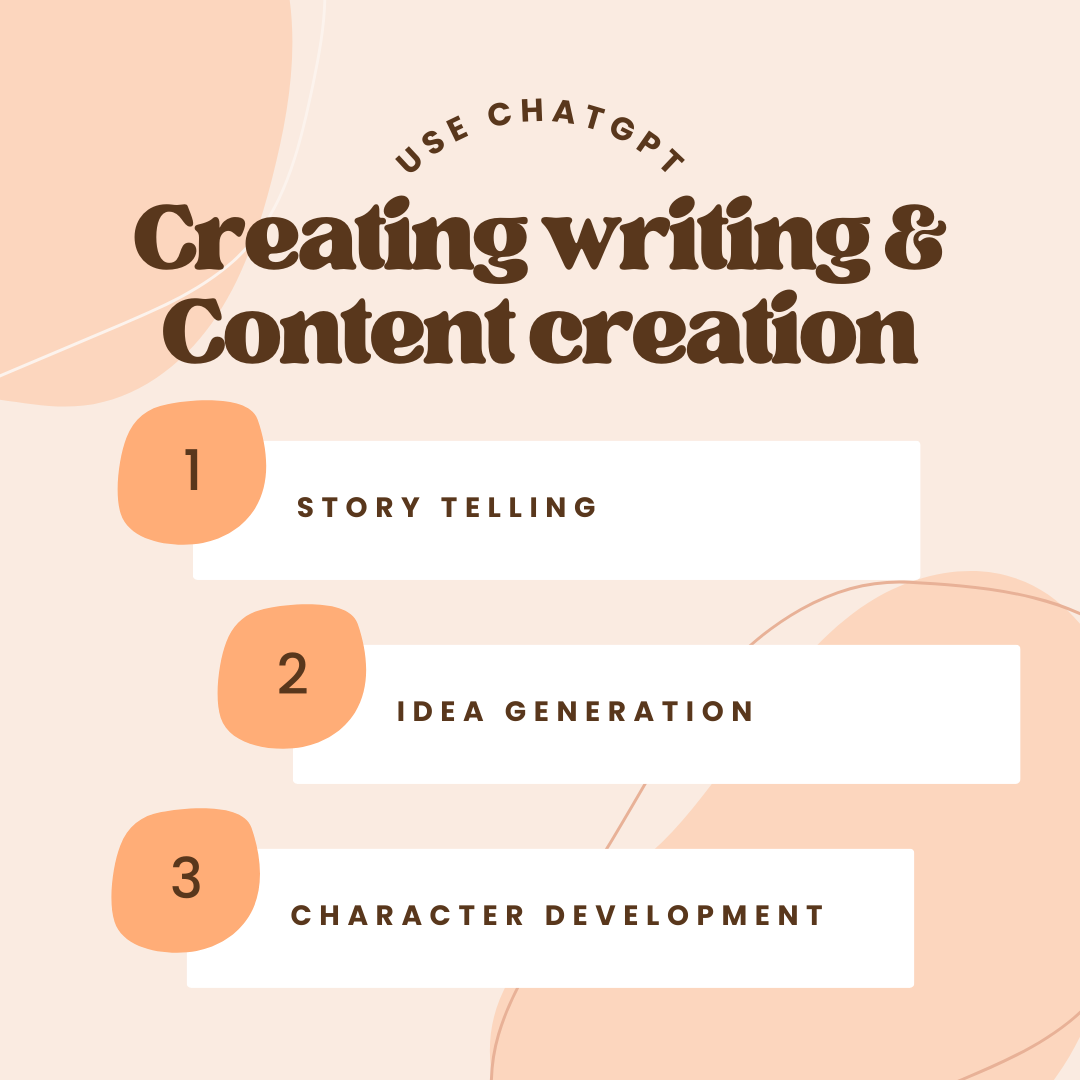
  1. Storytelling: Collaborate on writing short stories, poems, or even outlines for novels, whether for
     personal projects or professional purposes.
  2. Idea Generation: Generate ideas for blog posts, screenplays, or marketing campaigns tailored to your themes.
  3. Character Development: Create fictional characters and dialogues for books, screenplays, or games.
  4. Summarization: Simplify lengthy articles, documents, or books into key points to save time.
  5. Planning: Build detailed to-do lists, project roadmaps, or daily schedules.
  6. Email Drafting: Write professional emails or personalize responses efficiently.
  7. Explain Complex Topics: Break down intricate concepts like quantum physics or machine learning into simple explanations.
  8. Language Practice: Learn and practice foreign languages or understand idiomatic phrases.
  9. Problem-Solving: Solve riddles, puzzles, or technical questions related to coding, math, or science.
  10. Code Generation: Create snippets of code in languages like Python, JavaScript, etc., for specific tasks or problems.
  11. Debugging Assistance: Analyze and fix programming errors quickly.
  12. API Simulations: Mock chatbot conversations or workflows for software projects.
  13. Role-Playing: Simulate interviews, debates, or professional conversations for practice and preparation.
  14. Creative Games: Develop word games or trivia quizzes collaboratively for fun or educational purposes.
  15. Career Guidance: Craft resumes, cover letters, and LinkedIn summaries to stand out professionally.
  16. Recipe Suggestions: Generate recipes based on ingredients you have available.
  17. Travel Planning: Build itineraries, packing lists, and explore destination recommendations.
  18. Futurism: Predict developments in technology, AI, or industry trends.
  19. Custom Challenges: Generate unique personal challenges like fitness routines, writing prompts, or productivity goals.
  20. Design Assistance: Plan frameworks for presentations, products, or businesses.

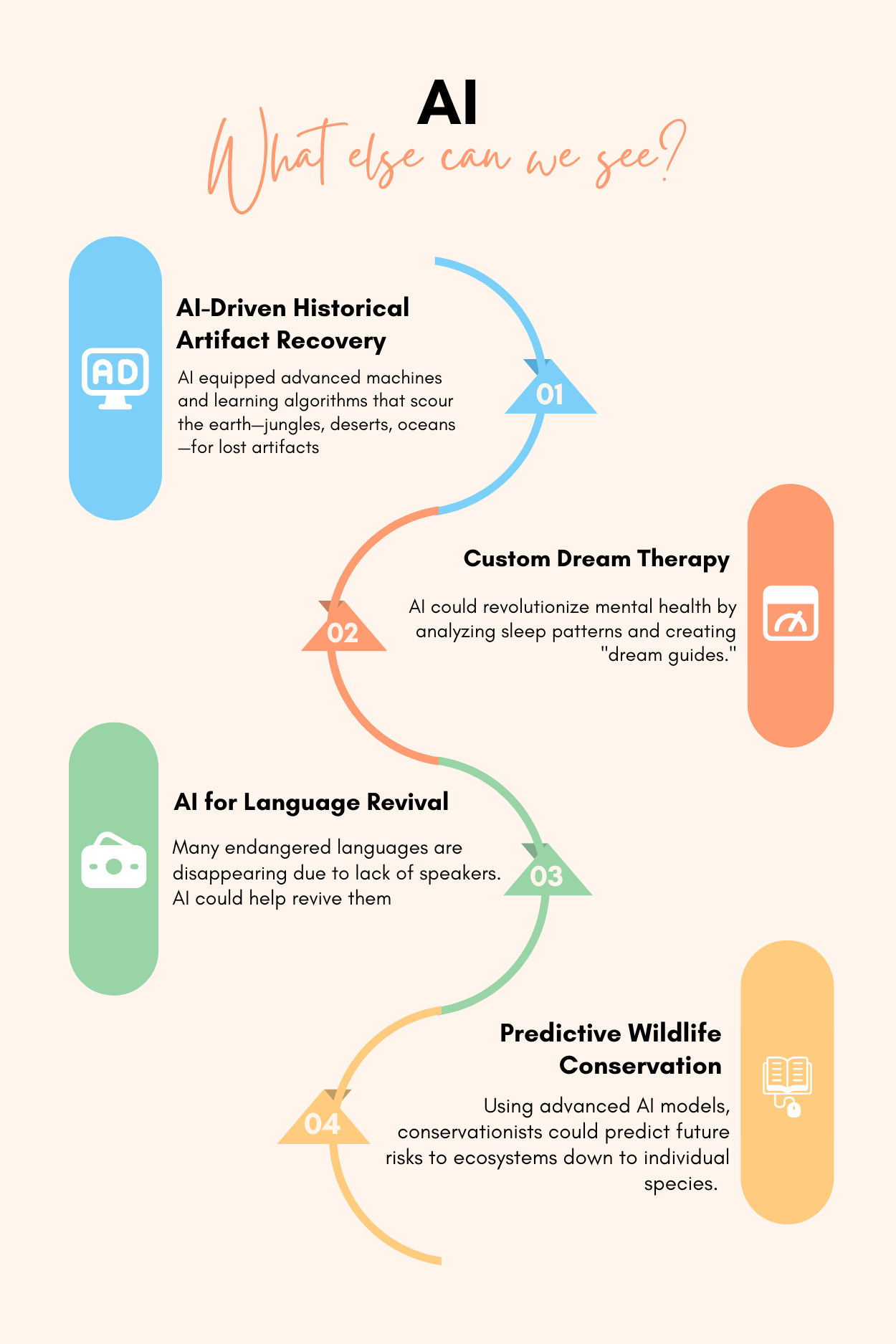
ChatGPT’s versatility allows you to tackle practical tasks, explore creative ideas, and enhance your daily routines. Let it be your partner in problem-solving, learning, and creating. Despite the shared creative and practical ways to unlock ChatGPT’s potential, there are many more possibilities that we have yet to see from AI. 


Futuristic_AI

Your Starting Point: Essential Data Science Terms for Newbies


Data science isn’t your typical, neatly defined field; it’s a blend of various disciplines such as computer science, mathematics, and statistics. Its versatility allows it to be applied across numerous domains, requiring expertise in each specific area. For instance, developing a medical analysis application necessitates collaboration with medical professionals to ensure accurate system definition and result interpretation.

Data scientists dive into data, crafting visualizations and crunching vital statistics. From there, they construct machine learning models to uncover patterns. Machine learning and deep learning fall under the umbrella of data science.

Data scientists dive into data, crafting visualizations and crunching vital statistics. From there, they construct machine learning models to uncover patterns. Machine learning and deep learning fall under the umbrella of data science.

Now, you might wonder about the distinctions between data science, data analytics, and big data. Big data entails vast volumes of diverse data, distinguished by its four Vs: volume, velocity, variety, and veracity. Meanwhile, data analytics focuses on extracting insights through statistical calculations and visualizations, akin to descriptive statistics.

But why the focus on data science now? Three key factors play into it: the unprecedented abundance of data, enhanced computational power, and the evolution of sophisticated algorithms for pattern recognition and machine learning.

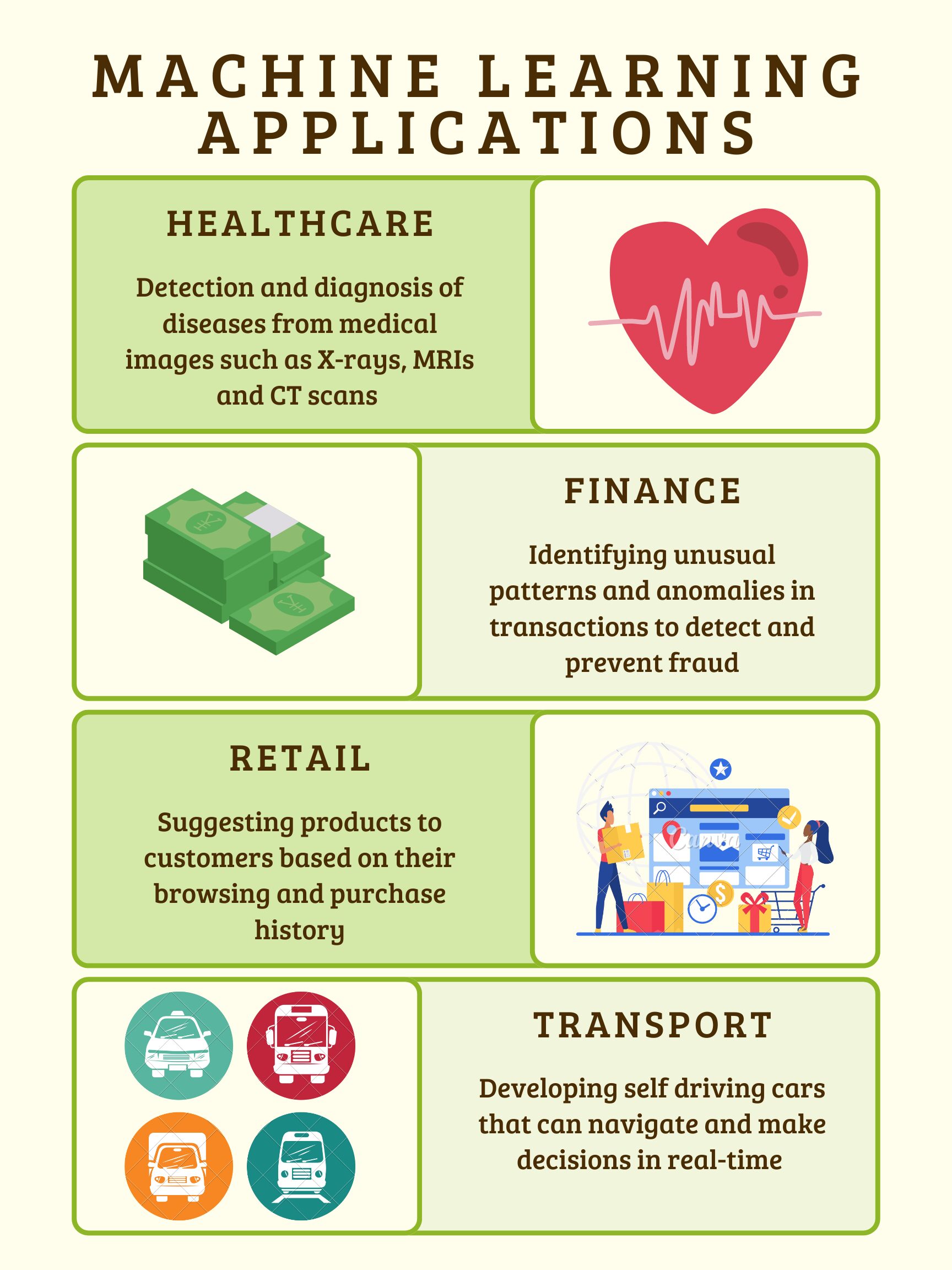
The applications of data science and machine learning are ubiquitous, spanning healthcare, finance, transportation, social media, e-commerce, and virtual assistant apps. For instance, in healthcare, machine learning aids in disease diagnosis and drug discovery, while in finance, it powers predictive algorithms for customer defaults and fraud detection.
Social media platforms utilize machine learning for spam filtering and sentiment analysis, while e-commerce giants leverage it for personalized recommendations and customer support. Even virtual assistant apps, like chatbots, are powered by machine learning to intelligently respond to user inquiries.

As for the history of data science, the term emerged decades ago but gained prominence only recently. Looking ahead, cloud services offer immense potential for advancing machine learning applications across various sectors, potentially bringing once-fictional technologies like assistant robots and self-driving cars into our daily lives.

Regarding the future of data scientists, the demand is soaring, with lucrative opportunities and high-paying jobs awaiting skilled professionals. Learning data science could be a game-changer…..


Common terms used in Data Science

Data, Observations and Variables

Data serves as the foundation of modern computing, with the ability to store and process vast collections of information ranging from numbers to words. In a nutshell, data encompasses facts, measurements, observations, and various other forms of input that can be feasibly processed by computers.

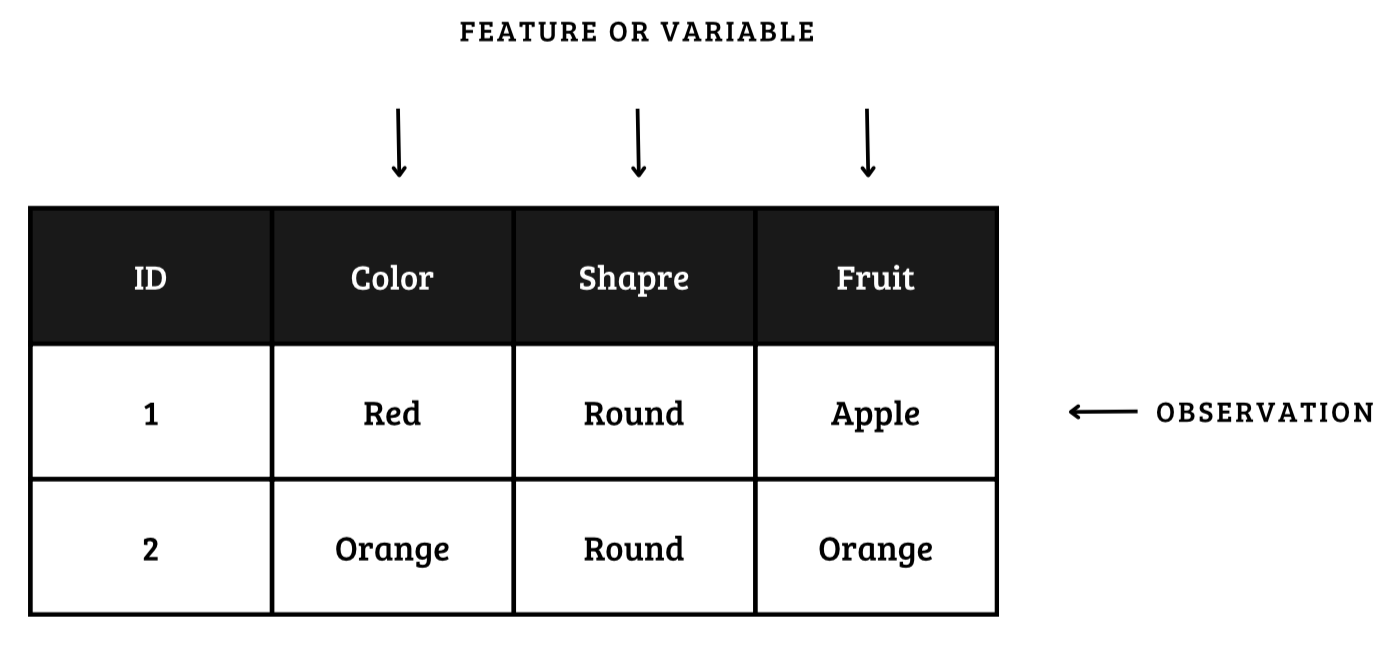
When it comes to organizing data, a common practice is to structure it in columns and rows. Each row typically represents a distinct observation or case, while each column is dedicated to a specific feature or variable. This systematic arrangement allows for efficient data processing and analysis.

In the realm of variables, there exist two primary categories: numerical and categorical. Numerical variables are characterized by their quantifiable nature, enabling computations like mean calculations. On the other hand, categorical variables involve non-numeric values such as labels, which do not lend themselves to statistical operations like determining the mean.

For predictive analytics, understanding the distinction between dependent and independent variables is crucial. Dependent variables are the targets of prediction, while independent variables (or X variables) serve as the predictors influencing the outcome (Y variable). It’s imperative that independent variables remain unrelated to each other to maintain the integrity of predictions.

y = f(x)

Population and Samples

In the domain of data science, the concepts of population and sample play a pivotal role. The entirety of data points constitutes the population, yet practical constraints necessitate working with representative samples. By selecting a sample that mirrors the population characteristics, data scientists can make inferences and predictions with confidence.

Machine learning algorithms are designed to derive parameters from samples that effectively generalize to the broader population. This process involves mapping relationships learned from the sample data to the entire population, highlighting the importance of selecting an appropriate sample using sound sampling techniques.

In essence, the effective utilization of data science concepts like population, sample selection, and variable types empowers analysts and data scientists to draw meaningful insights and predictions from data. 

Outliers and Missing data

In the realm of data science, after delving into the concepts of population and sampling techniques, let’s shift our focus to the critical aspects of outliers and handling missing data. An outlier, as the term suggests, is a data point that deviates significantly from the majority of observations within a dataset. This aberration may stem from measurement variability or experimental errors, potentially skewing the performance of machine learning algorithms.

Visualizing data is a powerful technique for outlier detection, allowing analysts to pinpoint anomalies that stand out from the general pattern. Consider an example where two cases  exhibit outlier characteristics as shown in the diagram below. 

Dealing with outliers can involve various strategies such as

  1. outright removal i.e. to drop them altogether
  2. capping values with a threshold
  3. assign new values based on dataset statistics e.g. replace with the mean, median or mode of the dataset
  4. transforming the dataset itself to mitigate their impact

Addressing missing data poses another challenge in data analysis. One approach is the removal of observations with missing values, albeit at the cost of potentially losing valuable information. Alternatively, data imputation techniques come into play, enabling analysts to fill in missing values effectively.

For numeric features, imputation can involve substituting missing values with the mean, median, or mode of the dataset, or randomly selecting observations to derive replacement values. Another sophisticated technique entails regressing the missing feature against other variables to predict and fill in the absent value.

In cases where categorical features exhibit missing values, imputation methods include replacing them with the mode (most frequent value) or employing models like K-Nearest Neighbors (KNN) to predict the missing values based on the dataset’s existing information.

Successfully navigating outliers and missing data challenges in data science demands a nuanced approach that balances data integrity and analytical robustness. By leveraging outlier detection methodologies and strategic imputation techniques, analysts can enhance the quality and reliability of insights drawn from diverse datasets.